Tara DeZao is a writer, activist and podcast host. She holds a BA from the University of California at Berkeley and an MBA from the University of Massachusetts at Amherst. She enjoys spending time with her wife and son and a good, strong cup of coffee. Tara’s opinions are her own and not affiliated with other organizations.
In an inteview done by Adrian Swinscoe, we cover the autonomous enterprise, generative AI, first-party data, getting your ‘data’ house in order, getting personalisation right and, of course, how gen AI will impact all of this.
The advent of machine learning (ML) and artificial intelligence (AI) has driven unimaginable benefits and opportunities across every industry. But just like any technology or innovation, once in the hands of human beings there is an increased potential for ethical abuse — so much so that governments around the globe have leaned in hard to regulate these technologies.
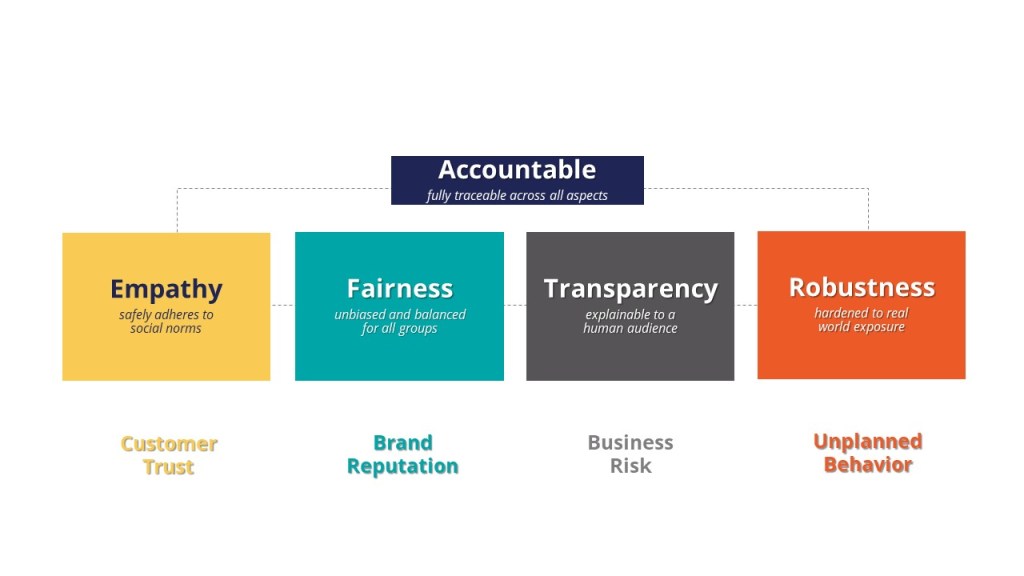
Marketers and customer engagement practitioners who leverage these technologies to improve customer engagement can deliver more ethical AI-driven outcomes by governing their strategy with four components: transparency, robustness, fairness and empathy.
Tara DeZao, Director of Product Marketing for Martech & Adtech at Pega, adds:
“In 2023, we’ll see organizations using AI more than ever before, particularly with their first party data. While the threat of the sunsetting of third-party cookies continues to get pushed out (as of now, we’re looking at 2024), brands in the know are busy preparing ways to maximize their most precious resource – first party customer data – as soon as possible, regardless of this looming deadline. Additionally, with an impending recession, it’s going to be more important than ever to have smart, empathetic, and helpful interactions with customers, and that’s done by intelligently analyzing and making decisions based on customer data – including context and history – to understand and meet them exactly where they are on their journey. Economic downturns are prime for customer churn, so one wrong or insensitive interaction can send customers running for a competitor, and marketers need to (and can) do better.
Virtually every brand has some technology implemented for collecting and storing customer data. But it’s activating that data that’s going to separate the leaders from the laggards, and we’ll see a lot of this in the year to come. Customers move quickly through their buying journeys, often pivoting and changing course in an instant. The only way for brands to keep up will be to infuse AI and decisioning into their data strategies. Understanding a customer’s propensity to buy based on their behavior and quickly acting on that data in real time can be the difference between making a lasting impression or losing out to a competitor.”
Abstract: Change is inevitable, and sometimes transformation happens gradually. At other times, as the global pandemic showed us, it happens without warning. Either way, traditional marketing tactics have no place in mo dern customer experiences (CX). So how can brands build trust and develop deeper relationships through ever-changing sentiment or market conditions? They need to show customers that they understand their unique situation and can provide tangible value. Marketing and customer engagement practitioners can achieve true one-to-one engagement with artificial intelligence (AI)-powered, ‘always-on’ models that continuously engage customers during calculated ‘moments of need’. Legacy marketing techniques will no longer be sustainable in a rapidly evolving business landscape riddled with data constraints, regulatory challenges and labour shortages. Organisations need to move away from data silos and channel-specific strategies and instead rely on a single ‘brain’ that helps orchestrate engagement with each customer. Brands can survive only by moving beyond sales and mixing additional messages that support retention, service, nurture and resilience actions into their marketing framework; only then can they deliver truly personalised customer experiences across channels while always remaining sensitive to their circumstances.